






From Research Tool to NHS Reality: Building the Future of TMS with Dr. Mohamed Abdelghani
October 21, 2026 - neurocare group

For decades, many people living with depression faced a difficult reality. If standard treatments such as psychotherapy and antidepressant medication did not provide sufficient relief, the next available options often involved increasingly invasive interventions.
Today, transcranial magnetic stimulation (TMS) is helping to bridge that gap. As a non-invasive form of neuromodulation, TMS has become an established treatment option for depression in many parts of the world. Yet bringing innovative treatments from research settings into routine clinical care is rarely straightforward.
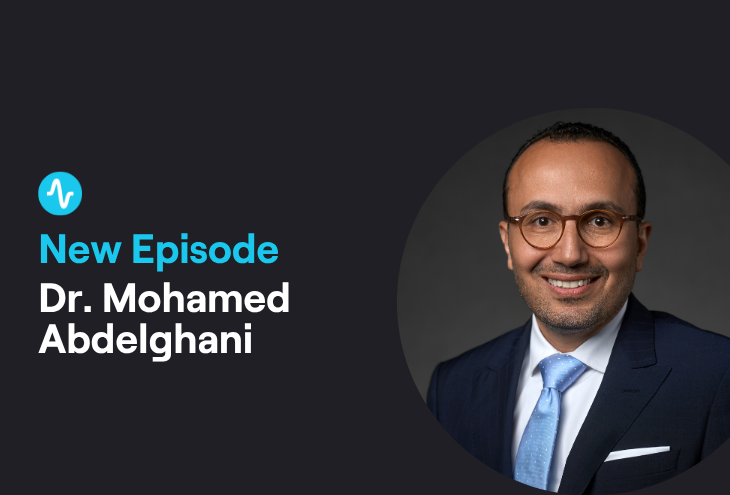
In the latest episode of the Neurocare Academy Podcast, Dr. Trevor Brown speaks with Dr. Mohamed Abdelghani, Consultant Psychiatrist, international TMS educator, former President of the Clinical TMS Society, and founder of one of London's earliest NHS TMS services, about the challenges and opportunities of expanding access to neuromodulation.
Their conversation explores the evolution of TMS in the United Kingdom, the realities of implementing innovation in healthcare systems, and why increasing awareness may be one of the field's most important priorities.
From Experimental Technology to Clinical Reality
Dr. Abdelghani's interest in neuromodulation began while working with patients experiencing treatment-resistant depression.
During his specialist psychiatry training, he frequently encountered individuals who had not responded adequately to multiple antidepressant medications. While treatments such as electroconvulsive therapy (ECT) remained valuable options, he felt there was a significant treatment gap between medication and more invasive interventions.
As he explored the emerging evidence for TMS, the technology stood out for its combination of safety, tolerability, and clinical effectiveness.
"TMS felt for me that it fills this gap," he explains during the interview. "It's a non-invasive treatment, extremely safe, more effective than medication."
That conviction would eventually lead him to become one of the earliest advocates for NHS-based TMS services in London.
Bringing TMS into the NHS
While TMS had already been cleared for depression in other countries, implementing it within the NHS required more than clinical evidence alone.
When Dr. Abdelghani joined what is now the North London NHS Foundation Trust, he set out to build a neuromodulation service for patients with treatment-resistant depression. What followed was a two-year process involving business cases, procurement processes, stakeholder engagement, and extensive discussions with healthcare leadership.
One of the key lessons from the experience was that introducing a new healthcare intervention requires more than scientific knowledge.
As discussed during the interview, clinicians seeking to improve patient care often need to develop skills in leadership, finance, service design, and implementation science. Understanding the perspectives of both clinical and non-clinical stakeholders can be just as important as understanding the evidence itself.
The effort ultimately paid off. In 2016, the service opened, becoming the first clinical NHS TMS service in London and one of the earliest in the United Kingdom.
Why Access Still Matters
Despite significant progress, access to TMS remains uneven.
One of the central themes of the conversation is that many eligible patients remain unaware that TMS exists as a treatment option. Dr. Abdelghani argues that if a new medication demonstrated the same effectiveness and safety profile as TMS, it would likely receive far greater public attention.
Several factors contribute to this challenge.
Some people confuse TMS with consumer magnets or alternative therapies, despite TMS using electromagnetic fields generated through medical-grade equipment. Others assume TMS is similar to ECT, even though the patient experience, mechanism of action, and treatment process are fundamentally different.
The result is that many patients who could potentially benefit from TMS may never learn about the treatment.
According to Dr. Abdelghani, awareness remains one of the most important barriers facing the field today.
The Economics of Innovation
Healthcare systems must balance clinical outcomes with financial realities.
The discussion highlights an important consideration that is often overlooked when evaluating new interventions: cost-effectiveness.
While TMS requires an upfront investment, multiple health-economic analyses have suggested that effective treatment of depression can reduce longer-term healthcare and societal costs. By helping people recover, return to work, and reduce their reliance on ongoing treatment, TMS may provide benefits that extend beyond symptom improvement alone.
As Dr. Abdelghani summarizes during the conversation, one of the challenges is helping decision-makers understand that meaningful savings often require initial investment.
This conversation is particularly relevant as healthcare systems worldwide continue to evaluate how innovative treatments can be delivered sustainably and at scale.
Where Is TMS Heading Next?
The interview also offers a glimpse into the future of neuromodulation.
Dr. Abdelghani believes the field is increasingly moving toward accelerated treatment protocols, where multiple sessions can be delivered over shorter periods of time. Research groups across several countries are investigating whether these approaches can improve convenience, accessibility, and potentially treatment outcomes.
At the same time, advances in neuroimaging and connectivity-guided stimulation are helping researchers better understand how personalized treatment approaches may be developed in the future.
Importantly, Dr. Abdelghani envisions a future where access expands rather than becomes more exclusive. Conventional TMS could become widely available for patients who need it, while more sophisticated imaging-guided approaches may be reserved for individuals requiring additional treatment personalization.
Looking Ahead
The story of TMS over the past two decades is not only a story of scientific progress. It is also a story of implementation, persistence, and advocacy.
Research alone does not improve patient care. New treatments must be tested, funded, implemented, and made accessible to the people who need them.
As Dr. Abdelghani's experience demonstrates, bringing innovation into routine clinical practice requires collaboration between researchers, clinicians, healthcare leaders, policymakers, and patients themselves.
While challenges remain, growing clinical evidence, expanding service availability, and increasing public awareness suggest that TMS is continuing its transition from research tool to an increasingly important part of modern mental healthcare.
Learn More
Featured Guest
Dr. Mohamed Abdelghani
Consultant Psychiatrist, educator, researcher, and international leader in TMS. Former President of the Clinical TMS Society and founder of one of the first NHS TMS services in London.
Related Links
Nurify MedicalClinical TMS Society
North London NHS Foundation Trust
London TMS Centre
Watch the Full Interview
This article highlights some of the key themes from our conversation with Dr. Mohamed Abdelghani. To hear the full discussion on TMS implementation, NHS adoption, clinical innovation, and the future of neuromodulation, watch the complete Neurocare Academy interview below.
▶ [Embed YouTube Video]


