



Treating depression in adults with TMS - the evidence
Can depression be treated with transcranial magnetic stimulation? TMS treatment for depression not only improves patients’ symptoms but the majority recover completely.
What is the recommended treatment for depression?
NHS Choices states that if you have depression that is not improving your GP should in the first instance recommend a talking therapy. There are different types of talking therapy for depression, such as cognitive behavioural therapy (CBT) provided by self-referral psychological therapy services such as IAPT. If you have moderate to severe depression, antidepressant medication may be recommended. There are almost 30 different types of antidepressants, which can be prescribed by a doctor. Your GP should recommend that you take a course of antidepressants plus talking therapy, particularly if your depression is quite severe. A combination of an antidepressant and CBT usually works better than having just one of these treatments. If you have severe depression, you should be referred to a multidisciplinary mental health team. These teams should provide intensive specialist talking treatments as well as prescribed medication.
Research indicates that with intensive psychological treatment and several courses of different medication there is a 60-70% chance of being cured of the depression. However, this unfortunately means that 30%-40% of people may end up with chronic depression that is resistant to conventional treatment.
How does Transcranial Magnetic Stimulation work?
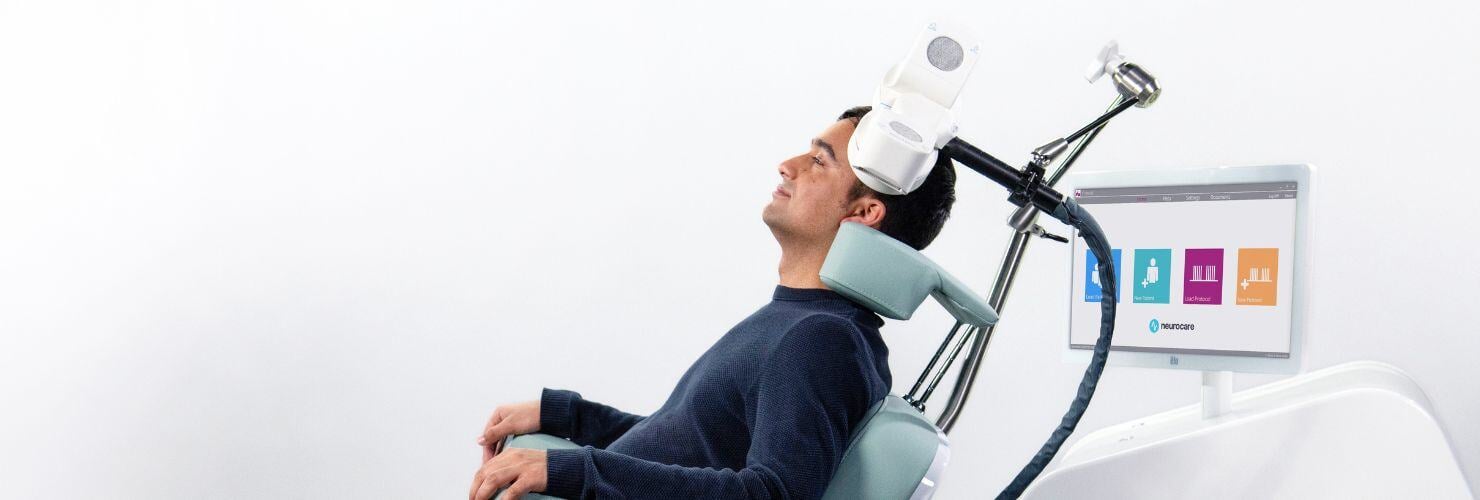
TMS is a strong pulsing magnetic field that stimulates brain cells. The passage of an electric current in the coil induces a transient, high-intensity magnetic pulse that penetrates the scalp and painlessly reaches the neurons of the targeted cortical area. High frequency TMS increases activity in the brain cells of the frontal cortex of the brain. It causes increased connectivity between brain cells and the release of chemical messengers.
The treatment of depression requires between 15 and 30 sessions administered over several weeks.
What are the recommendations for TMS?
The FDA approved TMS for the treatment of depression in the USA in 2008 following extensive research with multiple randomised controlled studies. NICE approved TMS for depression in the UK in 2015 and noted a “consistently positive outcomes in many studies and a good safety profile… commentary from patients was positive and they described significant benefits to their quality of life including the advantages for some patients of being able to stop oral antidepressant medications”.
In 2017, the Royal College of Psychiatrists stated that the “Efficacy for rTMS treatment for major depression has been well established over the recent years…. over the past decade rTMS has been widely used for the treatment of depression and is now an established safe and effective treatment option for depression and treatment resistant depression.”
How effective is TMS for the treatment of depression?
A meta-analysis of 19 randomised controlled trials by Vida et al. (2023) found that rTMS significantly improved outcomes for patients with treatment-resistant depression. In the study, nearly 40% of patients responded to rTMS, which was 2.5 times higher than the placebo treatment (p < .001). Additionally, nearly 36% of patients achieved remission and the study found active rTMS was three times more effective than sham treatment in achieving remission (p < .001). These results indicate strong clinical benefits for people who have not responded to antidepressants. Furthermore, a systematic review and meta-analysis by Shi et al. (2024) found that accelerated TMS (aTMS) demonstrated significant antidepressant effects compared to sham, with evidence suggesting sustained benefits at follow-up, and comparable efficacy and safety to standard rTMS protocols.
At Smart TMS, we analysed 342 patients treated for clinical depression. Approximately three out of four patients (73%) experienced at least a 20% improvement in symptoms, as measured by a reduction in PHQ-9 scores. Half of the patients (56%) achieved remission and no longer met the clinical threshold for depression, while one in four (26%) reported a near-complete resolution of depressive symptoms. These outcomes are favourable compared to results in published clinical studies.
Conclusions and recommendations:
We recommend that TMS should be considered for individuals with clinical depression who have not improved with conventional treatments such as antidepressant medication and psychotherapy. The scientific evidence and our own outcomes show that TMS can lead to significant symptom reduction and remission in a substantial proportion of patients with treatment-resistant depression.

Dr Leigh A Neal MB BCh FRCPsych MRCGP MD
Consultant in Psychiatry and Neuromodulation
Medical Director: Smart TMS