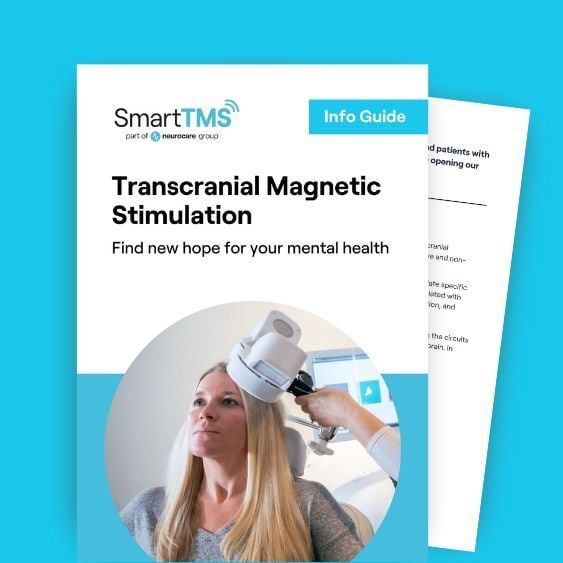





Treating cocaine addiction with TMS - the evidence
Can cocaine addiction be treated with transcranial magnetic stimulation? A number of studies have shown that TMS is effective in reducing cravings.
How does an addiction affect the brain?
Addictive substances, such as cocaine, alcohol and nicotine, increase levels of the natural chemical messenger, Dopamine. This occurs in brain circuits controlling pleasure and movement. Normally, the brain releases Dopamine in these circuits in response to potential rewards, like the smell of good food. It then recycles the Dopamine back into the cell that released it, shutting off the signal between nerve cells. Addictive substances prevent Dopamine from recycling, causing excessive amounts to build up between nerve cells. This flood of Dopamine ultimately disrupts normal brain communication and causes the intense pleasurable effects. Repeated use of addictive substances can cause long-term changes in the brain’s reward circuit and other brain systems, which may lead to addiction. The reward circuit eventually adapts to the excess Dopamine brought on by the drug. As a result, people take stronger and more frequent doses to achieve the same high and to obtain relief from the withdrawal symptoms.
What treatment is available for cocaine addiction?
There has been no FDA or NICE approved treatment for Cocaine addiction to date. A number of different types of medication have been used to try and treat Cocaine dependence. These include: Risperidone (antipsychotic medication), Topiramate (an anticonvulsant), Disulfiram (used to treat alcoholism) and Modanifil (a stimulant used to treat narcolepsy). However, none of these medications has yet been established as an effective treatment and they have their own side effects. Psychological approaches to Cocaine Dependency include Cognitive Behavioural therapy (CBT) and Contingency Management (providing rewards to patients who remain substance free). Combinations of this type of treatment have been shown to be the most effective treatment for Cocaine dependence. However, these interventions are prolonged and time consuming and may need to continue for 6 months or more to be effective.
How does Transcranial Magnetic Stimulation work for addiction?
TMS stimulates the brain and changes excitability in the cortex through magnetic fields over the scalp. The passage of the electric current in the coil induces a transient, high-intensity magnetic pulse that penetrates the scalp and painlessly reaches the neurons of the targeted cortical area. High frequency TMS produces increased cortical excitability, increases neuroplasticity (connections between nerves) and causes dopamine neurotransmitters to be released. Over time this effect penetrates more deeply into the brain influencing the areas associated with the craving and addictive behaviour.
What is the scientific evidence for the efficacy of TMS in cocaine addiction?
A systematic review of 8 randomised controlled trials (RCT’s) by Rocca et al. (2025) found that rTMS applied to the left dorsolateral prefrontal cortex (L-DLPFC) is a well-tolerated treatment reducing both cocaine cravings and impulsivity. Moreover, a RCT by Rasgado-Toledo et al. (2024) found that rTMS applied to the L-DLPFC significantly reduced cocaine cravings and enhanced white matter connectivity in the brain (p < .05). This improved connectivity supports more efficient communication between brain regions involved in self-control and decision-making, functions often impaired in cocaine addiction. These findings support rTMS as a promising neuromodulation treatment.
What are the treatment results at Smart TMS?
At Smart TMS, we analysed a case series of 36 patients who received rTMS treatment for cocaine addiction. Of these, 24 patients (67%) experienced at least a 35% reduction in cravings, while 42% achieved full remission (no cravings). On average, patients saw a 68% reduction in cravings, as measured using a visual analogue scale (VAS).
Conclusions and recommendations:
TMS should be considered for individuals with cocaine addiction who have not responded to standard psychological interventions. It may help reduce cravings and support recovery, particularly when other treatment strategies have proven ineffective.

Dr Leigh A Neal MB BCh FRCPsych MRCGP MD
Consultant in Psychiatry and Neuromodulation
Medical Director: Smart TMS